The coos
Highland cows: where you actually see them, and which tour promises it
A surprising number of people book a Highlands day trip mainly to meet a coo, and then spend twelve hours watching for one out of a coach window. One tour on this page has the stop written into the itinerary. The rest are luck.
Quick answer
Highland cattle are the shaggy, long-horned native breed of the Scottish Highlands and Hebrides, and a group of them is called a fold, not a herd. You can see them from the road on most Highland routes, but only one listing on this page — the Loch Ness, Glencoe and coos tour at $70 — builds a stop around them. Everywhere else it depends on which field the fold is standing in that morning.
Highland cattle, at a glance
- The breed
- Native Scottishfrom the Highlands and the Outer Hebrides
- The word
- A foldnot a herd — and locally, coos
- Registered since
- 1885one of the oldest herd books in the world
- The coat
- Doubleoily outer layer, woolly under layer
- The fringe
- A dossanand it keeps rain and flies off the eyes
- Horns
- Both sexeslonger and upswept on the cows
- Cow weight
- 400–600 kgbulls half as much again
- Colour
- Not only redblack, dun, yellow, white and brindle
- Guaranteed stop
- $70the one listing that promises it
- Best months
- All yearthey live outside through the winter
The animal
What makes a Highland cow a Highland cow
Two coats, horns on both sexes, and considerably more colours than the postcards.
It is a cold-weather animal that was never improved into something softer.
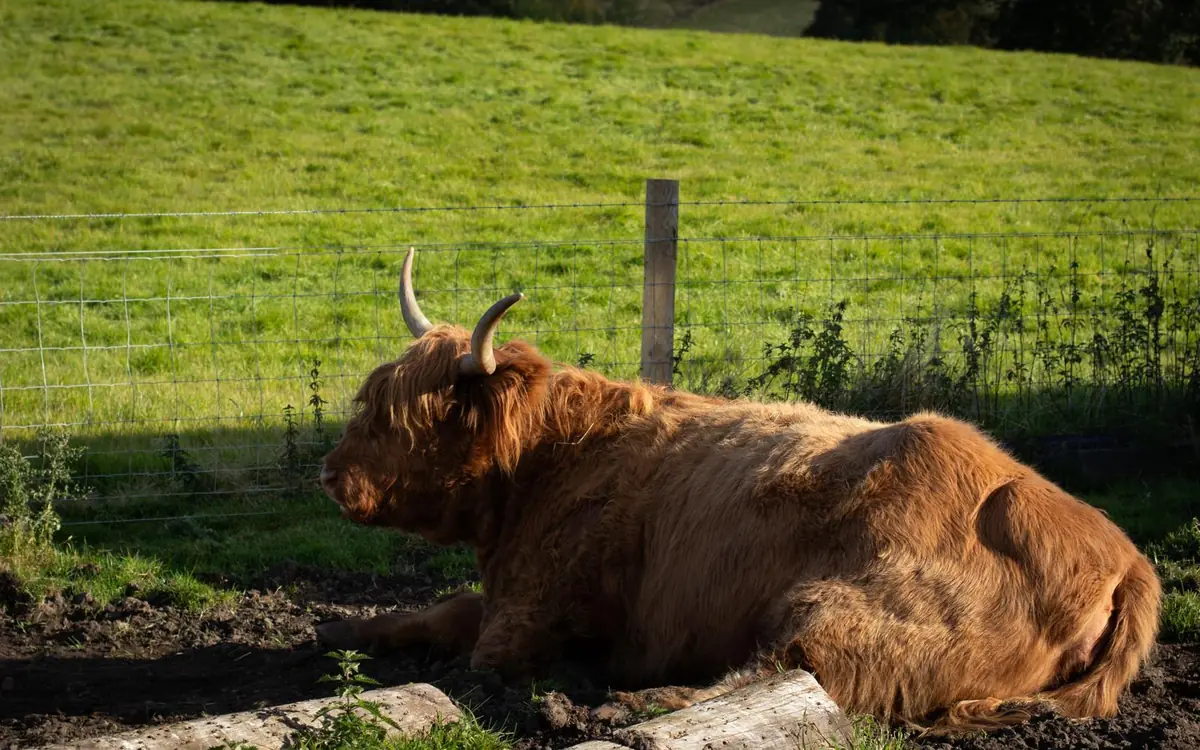
The coat does the work. There are two layers: a long, oily outer coat that sheds rain, and a dense woolly one underneath that holds heat. Together they let the animal live outdoors through a Highland winter without the layer of back fat that other beef breeds carry, which is why the meat is lean. The fringe over the eyes — a dossan — keeps rain and insects out of them.
The horns are on both sexes. On a bull they come forward and are relatively short; on a cow they sweep upward and are longer, which is the opposite of what most visitors guess. The animal in the photograph you have seen is usually a cow.
They are also not all ginger. Red is the postcard colour and the most common, but black, dun, yellow, white and brindle are all standard, and black was the older Highland type.
Temperament is placid but they are not pets: they are cattle with a metre of horn, standing in a working field. The rule at every roadside is to stay on your side of the fence and let them decide how close they come.
Where to look
The five places Highland cows actually turn up on these tours
None of these except the first is guaranteed, but all five are where people see them.
- On the tour that promises it
The Loch Ness, Glencoe and coos day at $70 is the only listing here with the stop written in. If meeting one matters, that is the booking.
- Rannoch Moor and the approach to Glencoe
The A82 crosses open grazing here, and folds are regularly standing within sight of the road. Drivers slow down and point them out.
- The Great Glen, between Fort Augustus and Inverness
Fields along the loch shore. This is where most people on the northern day trip get their photograph.
- Around Loch Lomond and Stirling
The southern loop passes several farms that keep a fold within sight of the road, partly because visitors like it.
- On Skye and the road west
The three-day trip crosses more grazing than any day tour, so it has the best odds of the lot — and the time to stop.
If the coos are the reason you are booking, there is one listing that stops for them and eleven that do not.
Which tour to book→The etiquette
How to photograph a coo without annoying a farmer
Stay behind the fence, do not feed them, and use the zoom.
These are working animals on private land, and almost every complaint from the farms along these routes comes down to the same four things.
Stay on your side of the fence. A field with cattle in it is not a viewpoint. The photographs you have seen were nearly all taken from the road, using the zoom.
Do not feed them. Bread and apples are genuinely bad for ruminants, and a fold that learns to expect food starts pushing at fences and at people.
Give a calf room. A placid cow stops being placid when something gets between her and a calf. Two metres is not enough; the far side of the fence is.
Park where the coach parks. The lay-bys on the A82 are narrow and the road is fast. On a tour this is handled for you, which is quietly one of the better arguments for taking one.
Done properly it takes two minutes and everybody gets the photograph. The farms along these roads have been extremely tolerant of a great deal of traffic, and it is worth not being the reason a fence goes up.
Common questions
Highland cows, answered
Where can you see Highland cows in Scotland?
On grazing land along the A82 through Rannoch Moor and Glencoe, in the Great Glen near Loch Ness, and around Loch Lomond and Stirling. Only one tour on this page — the Loch Ness, Glencoe and coos day — guarantees a stop.
What is a group of Highland cows called?
A fold, not a herd. In Scots they are usually just coos.
Do Highland cows have horns?
Yes, both males and females. The cows have the longer, upswept horns; the bulls’ are shorter and point forward.
Are Highland cows friendly?
They are placid by reputation but they are working cattle with long horns. Watch from the other side of the fence, never feed them, and stay well away from calves.
Are Highland cows always ginger?
No. Red is the most common and the most photographed, but black, dun, yellow, white and brindle are all standard colours, and black is the older type.
Why do Highland cows have long hair?
It is a double coat: an oily outer layer that sheds rain over a woolly inner layer that holds heat. It lets them live outdoors all winter without the fat other breeds need.
Which Highlands tour stops for Highland cows?
The Loch Ness, Glencoe, coos and Highlands day at $70. Every other listing on this page may pass them, but does not promise it.
Go deeper
More on the Scottish Highlands
The classic day trip
Twenty thousand reviews, and what the twelve hours contain.
Loch NessLoch Ness tours
What the loch is, and what the cruise costs on the day.
GlencoeGlencoe
The valley every tour stops at, and why the road is the point.
The viaductThe Glenfinnan viaduct
Twenty-one arches, a steam train and the 1745 rising.
All day tripsDay tours from Edinburgh
Every direction, compared, from nine hours to three days.
SkyeIsle of Skye
Three days, two nights, and why a day trip cannot do it.