Loch Ness12.5 hours
12.5 hLoch Ness, Glencoe & The Highlands
★ 4.7 · 2,459 reviews
- Loch Ness and Glencoe in one long day
- Twelve and a half hours from Edinburgh
- 2,459 reviews at 4.7
- Free cancellation
$57$4.56 / hour
Check availability→ Loch Ness
Loch Ness is 23 miles long, about 230 metres deep, and holds more fresh water than every lake in England and Wales put together. It is also 160 miles from Edinburgh, which is the single fact that shapes every tour on this page.

Quick answer
Loch Ness tours from Edinburgh run 12 to 12.5 hours and start at $57. The loch itself is free to look at; the cruise (about £20–£25) and Urquhart Castle (£14) are extras. Four listings on this page reach the loch. The usual stop is around two hours near Urquhart Castle or at Fort Augustus, where the Caledonian Canal steps down into the water through a flight of locks.
The loch itself
A flooded fault line, and the biggest body of fresh water in Britain.
It is a crack in the country.
The Great Glen is a fault line that runs clean across Scotland from Fort William to Inverness, and Loch Ness fills the deepest part of it. That is why the shape is so unusual: twenty-three miles long, barely a mile wide, and steep on both sides. It is less a lake than a flooded trench.
The depth — around 230 metres at the deepest sounding — means it holds more fresh water than all the lakes of England and Wales together, in a body of water you can see across. That volume also means it never freezes, and it keeps the glen a degree or two milder than the hills either side.
The water is very dark. Peat washes down off the surrounding moor and stains it, and visibility below the first few metres is close to nothing. Every sonar survey ever run on the loch has had to contend with that, and it is a large part of why the stories have lasted: it is a big, deep, opaque body of water, and looking at it does not tell you what is in it.
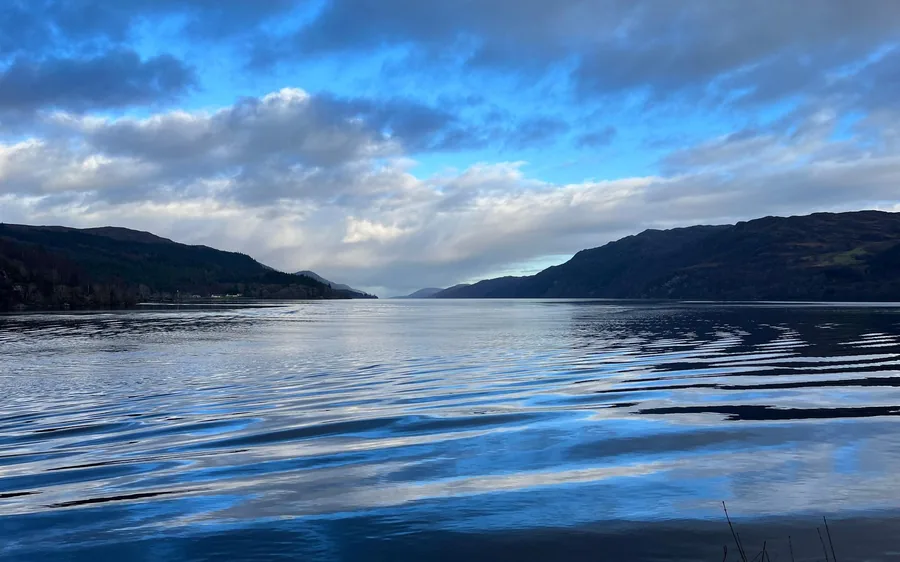
None of which is why people find it beautiful. The reason is the sides — the hills come straight down to the water for the full length, and on a still morning the whole thing goes flat and reflects them.
Book direct
Four listings, cheapest first. The others on this site go west to Glenfinnan or to the Outlander locations instead.
★ 4.7 · 2,459 reviews
★ 4.7 · 12,284 reviews
★ 4.5 · 2,725 reviews
★ 4.6 · 20,368 reviews
At the loch
You get one long stop. These are the realistic ways to spend it.
Fifty minutes on the water from Clansman Harbour or Dochgarroch, about £20–£25. It is the only way to see the scale of the sides, and the boats run sonar screens you can watch. The most popular choice by far.
A ruined castle on a headland on the western shore, £14 for an adult, with a timed entry slot. The setting is the point — it sits right on the water with the loch running away in both directions.
Possible in two hours if the cruise lands at the castle jetty, which some combined tickets do. Tight, but people manage it.
If your tour stops at the southern end instead, the Caledonian Canal drops into the loch here through five locks in the middle of the village. Watching a boat work through them takes about half an hour and costs nothing.
A serious option. Find a bench away from the car park, and give the loch forty minutes. A lot of people say afterwards this was the best part of the day.
The cruise is the one extra almost everybody buys. Here is what it costs and which pier it leaves from.
The Loch Ness cruise, explained→The monster
A big dark loch, a road built in 1933, and a story that outlived the evidence.
The modern legend starts in 1933, when a new road was cut along the northern shore and, for the first time, gave drivers a clear view of the water. Sightings began being reported that summer, a photograph followed in 1934, and the story has never gone away.
What is true is that the loch is enormous, extremely deep and effectively opaque, which makes it very hard to prove a negative. Systematic sonar sweeps and, more recently, environmental DNA sampling of the water have found no evidence of anything unusual living in it. The eDNA work did find a great deal of eel.
The guides on these tours mostly play it straight and tell it as a story about the place rather than a claim about biology, which is the right call. Nobody comes to Loch Ness for a zoology lecture, and nobody should be sold one.
The exhibition at Drumnadrochit takes the same line: it walks through each piece of evidence and what happened to it. It is honest, and it is more interesting than a gift shop full of green plush.
Common questions
Twelve to twelve and a half hours. Loch Ness is 160 miles from Edinburgh, roughly three and a half hours each way, and the tours give you about two hours at the water.
From $57. The cruise and Urquhart Castle are extras of about £20–£25 and £14 respectively.
About 230 metres, or 755 feet, at the deepest point. It holds more fresh water than all the lakes in England and Wales combined and it never freezes.
For most people yes. Fifty minutes on the water is the only way to appreciate how steep the sides are, and it is the single most-taken extra on these tours.
It is not prohibited, but the water sits at around 5–6°C year round and tours do not stop anywhere set up for it. Nobody on a coach day trip swims.
You see it from the road and from the water on the cruise. Going inside is a separate £14 ticket with a timed slot, so check whether your tour has built that in.
May, September and early October. Long enough daylight for the return leg to be scenic, and far fewer people than July.
Go deeper
Twenty thousand reviews, and what the twelve hours contain.
GlencoeThe valley every tour stops at, and why the road is the point.
The viaductTwenty-one arches, a steam train and the 1745 rising.
All day tripsEvery direction, compared, from nine hours to three days.
SkyeThree days, two nights, and why a day trip cannot do it.
OutlanderMidhope, Culross and which tours go inside.
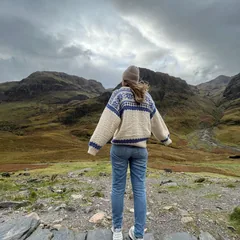
Loch Ness, Glencoe & the Scottish Highlands
★ 4.6 · 20,368 reviews · Free cancellation 24 h