Mar–May
Spring
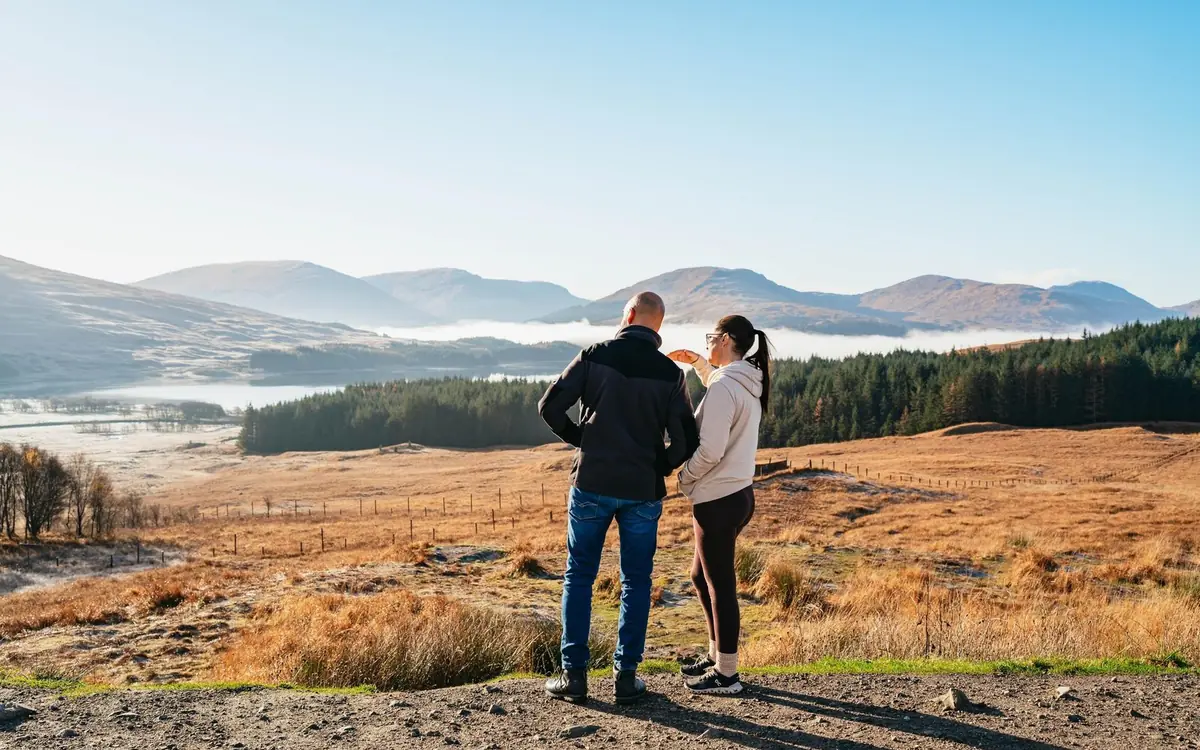
Daylight stretching from twelve hours to sixteen, snow still on the tops, and prices below summer. May is arguably the best month of the year up here.
Season
The routes run all year and the weather is unreliable in every month, so neither is the thing to plan around. Daylight is. In June you get seventeen and a half hours of it and in December you get under seven, and a twelve-hour tour is a different product in each.
Quick answer
May, June, September and early October are the best months for a Highlands day trip from Edinburgh: long daylight, moderate crowds and the steam train running from 1 June to 23 October. July and August are the busiest and dearest. From November to February the northern routes lose their last three hours to darkness, and the shorter southern loops are the better booking.
Season
The same twelve-hour tour, four very different days.
Mar–May
Daylight stretching from twelve hours to sixteen, snow still on the tops, and prices below summer. May is arguably the best month of the year up here.
Jun–Aug
Light until ten at night, the steam train running and everything open — along with the highest prices, full coaches at Glencoe and midges at the water on still evenings.
Sep–Oct
Colour through the glens, the train running until 23 October, and noticeably fewer people than August. Many people’s favourite window.
Nov–Feb
Sunrise near nine and dark by half past three, so a long northern day ends in the dark. Cheapest by a distance, and snow on the road is possible.
Daylight
Seventeen hours of light in June, six and a half in December.
This is the single most useful thing to understand before booking a winter date.
A Loch Ness day leaves Edinburgh at eight and gets back after eight in the evening. In June the sun rises before half past four and sets close to ten, so every mile of that day is in daylight — including the return through Glencoe and along Loch Lomond, which in evening light is one of the best hours of the tour.
In December, sunrise is around a quarter to nine and sunset around half past three. You leave in the dark, you see the loch in flat grey light in the early afternoon, and the entire return leg — four hours of it — happens in darkness. The tour costs less because it is worth less.
That does not make winter a mistake. It makes the shorter days the right booking: the nine-hour Loch Lomond loop and the eight-hour Outlander day both finish before the light goes, and both spend more time out of the vehicle than the northern routes.
The one genuine winter bonus is snow. Glencoe under snow is extraordinary and the coaches still run when the road is clear. It is a gamble, and the 24-hour free cancellation makes it a cheap one.
Weather
None of these is a reason not to come. All five change what you pack.
The west coast is wet in every month. The driest stretch is roughly April to June, which is a tendency rather than a promise. A waterproof jacket is not optional in any month.
Edinburgh is on the east coast at sea level; Loch Ness and Glencoe are neither. Expect a noticeable drop at every stop, plus wind off the water.
Not a slogan — the weather here moves fast off the Atlantic. Layers work; a single heavy coat does not.
Tiny biting flies that appear on still, damp evenings near water and vanish in any breeze. Repellent costs a few pounds and solves it.
The A82 through Glencoe is a main route and is cleared, but in heavy snow tours do get rerouted or cancelled. That is exactly what the free cancellation is for.
Whichever month you pick, the shape of the day is the same. This is the timetable of the classic route, hour by hour.
The classic day, hour by hour→What to pack
Twelve hours, several climates and one bag you keep on your knees.
The single most useful object on this day. Umbrellas do not work at Glencoe — the wind comes down the glen and turns them inside out within a minute.
The coach is heated, the loch is cold and windy, and the difference between Edinburgh and the water at Fort Augustus is several degrees in every month.
The viewpoints are gravel and grass, and both are muddy after rain. Nobody needs boots; nobody wants canvas trainers either.
The cruise, lunch and every entry take cards. There is no point on this day where cash solves a problem.
Lunch happens four to five hours in. On an early departure that is a long morning, and the comfort stops sell very little.
Common questions
May, June and September. Long daylight, the driest part of a wet year, the steam train running and fewer coaches than July and August.
Only the shorter southern routes. A twelve-hour northern day in December spends its last three or four hours in darkness. The nine-hour Loch Lomond loop and the eight-hour Outlander day both finish in daylight.
About seventeen and a half hours around midsummer and under seven around midwinter. That difference is what makes the same tour a different product.
From 1 June to 23 October in 2026 for the morning service, with an afternoon service added from mid June to late September.
June to September, on still, damp evenings near water. Any breeze disperses them, and repellent handles the rest.
Yes, in every month. April to June is the driest stretch, but there is no dry season on the west coast. Pack a waterproof whenever you come.
Noticeably. November and February are the cheapest months on every listing here, and every tour still cancels free up to 24 hours before if the forecast turns.
Go deeper
Twenty thousand reviews, and what the twelve hours contain.
Loch NessWhat the loch is, and what the cruise costs on the day.
GlencoeThe valley every tour stops at, and why the road is the point.
The viaductTwenty-one arches, a steam train and the 1745 rising.
All day tripsEvery direction, compared, from nine hours to three days.
SkyeThree days, two nights, and why a day trip cannot do it.
Loch Ness, Glencoe & the Scottish Highlands
★ 4.6 · 20,368 reviews · Free cancellation 24 h